- Published on
Bridging Trust in Africa's Real Estate Market: A Deep Dive with Virety's CEO
- Authors

- Name
- Virety360
- @virety360
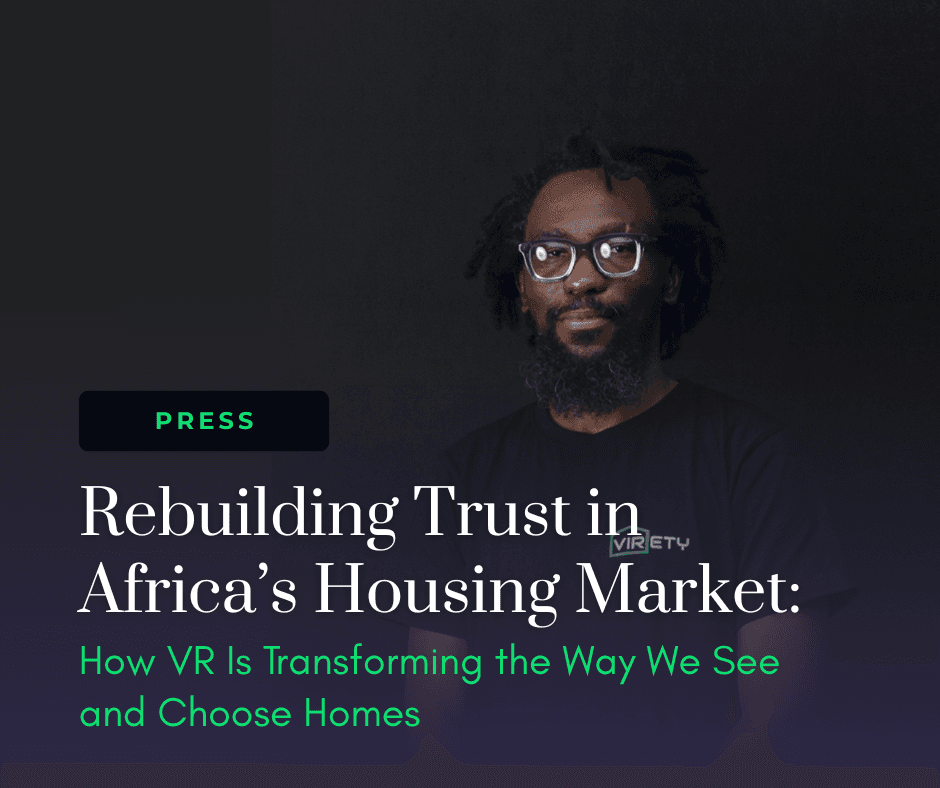
Bridging Trust in Africa's Real Estate Market: A Deep Dive with Virety's CEO
On October 22nd, 2025, our CEO, Olayinka Olamilehin, joined Israel Ojoko of Nairametrics for a deep dive into the shifting landscape of Africa's real estate and rental industry. The discussion highlighted how emerging technologies—verification tools, fintech innovations, digital payments, and immersive experiences—are poised to close critical gaps in trust, affordability, transparency, and cross-border access. Their exchange offers fresh insight into the future of Africa's housing market, read the full interview below.
Nairametrics (NM): Despite growth in digital housing platforms across Africa, trust and transparency remain major barriers. From your perspective, what structural issues—regulatory, technological, or cultural—are preventing the creation of a unified, verifiable property marketplace across African cities?
Olayinka: Trust and transparency are derived when solid proof is presented. Most listing platforms existing currently have only doctored proof from still images that are limited in coverage and do not reveal spatial or actual representation of the spaces for lease or rent because still images can be edited to suit the taste of a house seeker during online searches. 360 virtual tours are an excellent verifiable way to connect house seekers to the space they are taking and present to them a realistic sense of spatial dimension leading to an emotional connection to the spaces they want to rent, that is hard proof! The future of a verifiable property market place must include the use of virtual reality technology to rebuild trust. With 360 virtual tours you can see better and decide smarter.
NM: In many African cities, real estate prices are rising faster than income levels. How do you see technology—especially digital verification and online booking systems—helping to make rentals or short-lets more affordable or accessible for average consumers?
Olayinka: The current painful reality about rising cost of housing is the low quality delivery that exists given the amount that is paid to exchange housing services. Affordability is first about value. The question is are people getting good value for what they pay. Now with advanced technology like VR and 360 virtual tours maximum value can be earned from every penny invested in searching for spaces because the immersive nature of the technology helps to achieve precision in decision making, save logistical cost and time. The cost of searching is reduced to zero. Accessibility speaks to convenience, to consideration for those with limited mobility and geographical distance. Digital verification through 360 Virtual tours makes rentals and shortlets more accessible from anywhere in the world. It eliminates the factor of distance, unwarranted charges by illegal agents and booking surprises giving the average customer access to more unambiguous options from the convenience of their couch.
NM: Many property-related payments in Africa still depend on manual or cash-based systems. What role do you think fintech and digital payments should play in improving the rental economy, and how close are we to achieving seamless, trusted cross-border property transactions on the continent?
Olayinka: Fintech companies are doing their best in payments generally. Heavier transactions can be made easily online with legal backing and receipts, however the challenge in the process is the checks and balances between the promise made by landlords or hosts and tenants after the payments have been made. In this case fintechs can use their technology to demand more accountability from landlords or hosts.

NM: As platforms like Virety gather location, property, and user verification data, what level of data protection and regulatory oversight do you think is necessary to build public confidence in Africa's online housing market?
Olayinka: Privacy regulation is a very sensitive topic to address because it varies from country to country and continent to continent. However at Virety we have several systems in place to ensure user privacy such as government licensed service providers, and we only collect data that is necessary for the platform with user consent.
NM: Given recent developments such as the Dangote Refinery's influence on industrial zones, the AfCFTA's impact on mobility, and Nigeria's evolving mortgage landscape, what does the next five years look like for Africa's real estate and rental ecosystem—and where does Virety fit into that picture?
Olayinka: According to Statista, due to rapid urbanization the real estate market in Africa is expected to reach a value of US 22 tn by 2029 showing a 6% growth rate. Within this market the residential real estate segment dominates over 75% of that. Therefore the residential market would demand more precision due to high demand and buying power. Our mission at Virety is to help people make smarter choice and gain satisfaction with the help of virtual technology hence elevating their choices and providing concrete value.
NM: Successive Nigerian governments have announced affordable housing and urban renewal initiatives, yet implementation remains slow. What do you think is missing in the policy-to-execution pipeline, and how can the private sector bridge that gap sustainably?
Olayinka: It is a point of fact that the government is responsible for providing access to affordable housing for the middle and lower income earners. Therefore, the leadership should take accountability in ensuring speedy delivery of affordable housing for the people. The slower the delivery, the more complicated the problem due to bottlenecks created by population increase. For the private sector there has been too much focus on high profile real estate development and little concern for serving the largest economic class of the society. Therefore the private sector should engage partnerships and corporations that breeds strong investments that can help speed up housing needs for the middle or low income earners. At Virety, everybody is treated equally and allowed to host their properties and books without prejudice.
NM: Real estate investment in Africa still depends heavily on foreign capital. What structural reforms or financing models—such as REITs, digital co-ownership, or local investment pools—could help unlock more domestic participation in property development and rentals?
Olayinka: Investment Trusts coupled with the current tech ecosystem have provided enough avenues to allow the common man to invest the little they have in real estate through crowd funding. The problem is trust. We already have a system that is working, but the question is can we trust the system. Proper regulatory and licensing measures can be introduced to help trust the process and avoid scams.
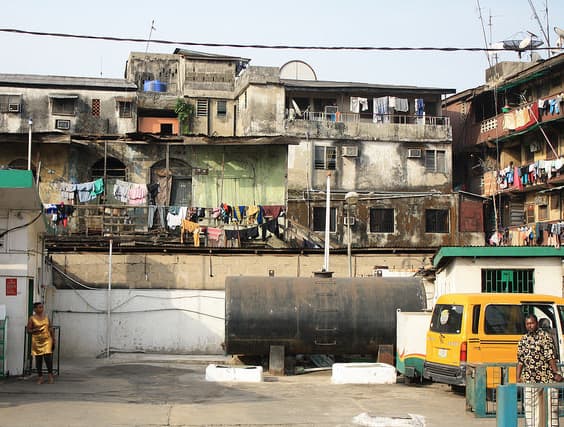
NM: Many properties across Nigeria struggle with unreliable power and poor infrastructure, which directly affects rental value and occupancy. From your experience, how much does infrastructure quality influence the digital housing market, and how can tech platforms respond to these physical constraints?
Olayinka: Infrastructure is the bedrock of a profitable real estate economy. However it has no direct effect on the digital housing market. What is required is that the digital housing market provides transparency and accurate depictions of what is on ground. The advantage the digital housing market has is the access to data which can be used to help the government understand the industry needs better. Providing a roadmap for infrastructural development.
NM: With the Naira's recent volatility and tightening FX liquidity, landlords and service providers are increasingly demanding dollar-based or crypto-linked payments. Do you see a future where digital or stablecoin-based payment systems become mainstream in the African property market?
Olayinka: The world is becoming increasingly digital, therefore the digital payment system will become more refined as the years go by and less cash based. The system is already enforcing rapid growth in digitalisation of currency and payment systems. So in the years to come it won't be a surprise to see a wide spread adoption of other forms of digital currency like crypto. Maybe not mainstream, but a valid option for a lot of property owners that are early adopters and within the younger demography.
NM: Africa's urban population is projected to double by 2050. In your view, what role will digital housing platforms, geospatial data, and immersive technology play in shaping smarter, more transparent, and inclusive urban housing systems for the next generation?
Olayinka: Africa's cities are expanding faster than our housing systems can keep up. The real crisis isn't just supply—it's trust and access. Millions of people still search for homes through guesswork—risking fraud, misinformation, and costly site visits. This is where digital housing platforms, geospatial data, and immersive technology will shape Africa's urban future.
At Virety, we see digital platforms as more than marketplaces—they are transparency engines. By combining verified listings with geospatial intelligence, we can map real housing availability and neighborhood infrastructure in ways that support smarter urban planning. When we layer immersive 360° virtual tours on top of that, people no longer make housing decisions blindly—they see exactly what they're paying for.
In Virety, we are poised to impact humanity by simplifying housing discovery and increasing the impact of visual technology in everyday decision-making. We envision a world where immersive 3D experiences transcend traditional boundaries—revolutionizing how people connect with spaces, build trust, and make informed choices. That's why we're building Africa's most trusted digital housing network—reducing fraud, empowering property owners, and giving renters and buyers full confidence before they commit.
For us, this isn't just property technology—it's about dignity, access, and building smarter cities for the next generation.
Discover more immersive property experiences at Virety360.